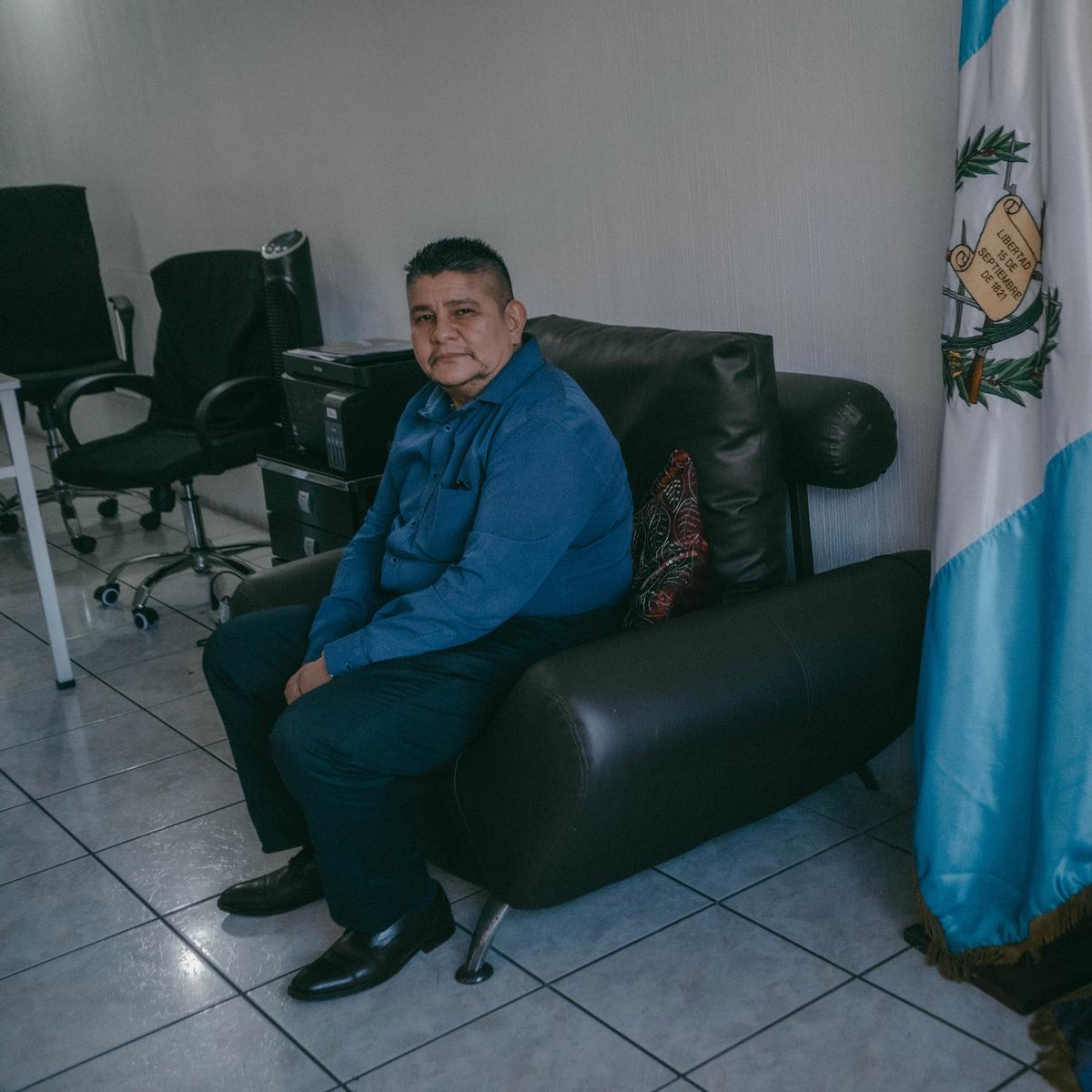
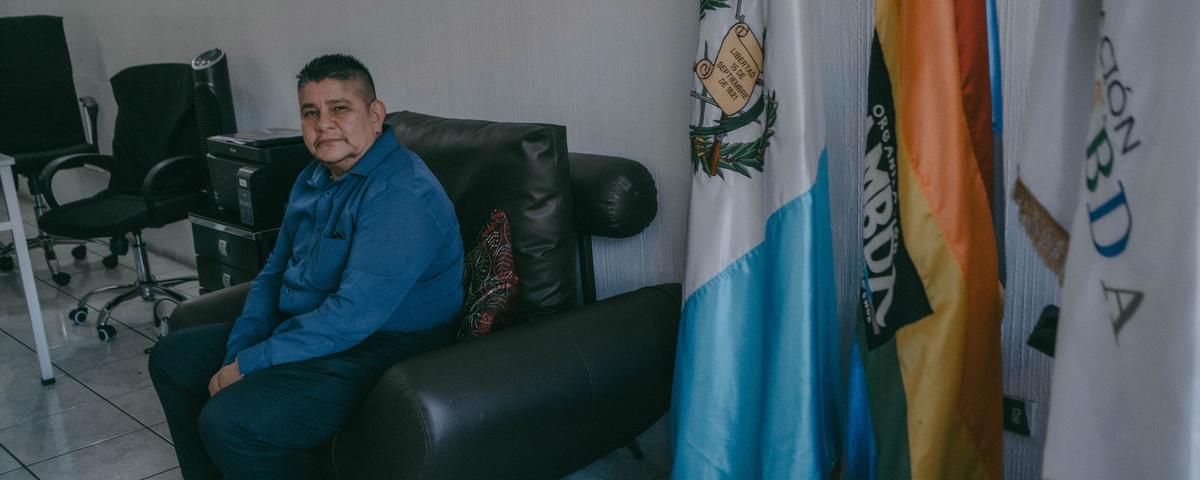
This is our third publication this year with Latino USA. We've also covered the ongoing plight of Guatemalan families separated by the U.S. government during Donald Trump's first term, and how nearly 200 women have been criminalized for having obstetric emergencies under El Salvador’s total abortion ban.
It's also the last episode of Central America in Minutes of the year. We’ll be back in the office on Monday, January 5, and will pick back up that Friday.
A lie from the White House
LEAÑOS, HOST: It’s early February 2025. President Trump is back in the White House. And he’s wasting no time cutting government funds.
Elon Musk, the world’s richest person, is helping the Trump administration drive the effort. They’re eviscerating, what they call, quote “waste, fraud and abuse” across the federal government. Here is Elon talking about USAID, one of its main targets.
MUSK: We started looking closely at USAID. This is a gigantic fraud loophole.
LEAÑOS: USAID is a U.S. government agency that provides humanitarian aid globally. After it was established into law in 1961 it became a lifeline for thousands of organizations around the world.
Basically, the U.S. has supported projects centered around Democracy, anti-corruption and other key initiatives, like health. Foreign aid, like USAID, had bipartisan support up until this administration and it was seen to be in the interest of the U.S.
But now, since Trump took office again, his administration has canceled nearly 65 billion dollars worth of USAID contracts, about 80 percent of its programs, and gutted the agency and its staff around the world. On top of that, the White House Press Secretary Karoline Leavitt latched onto a certain narrative around why funding cuts were needed.
LEAVITT: I would just say a strong message to Democrats who are out there, pretending to be outraged about the long list of crap that this administration is cutting federal waste and funding like $2 million for sex changes in Guatemala.
LEAÑOS: Yes, the White House Press Secretary said there were so-called “sex changes” happening in Guatemala using U.S. taxpayer dollars.
The misleading claim was directed towards Asociación Lambda, a local organization that helps LGBTQ+ people in Guatemala. And that rhetoric from the White House had ripple effects more than two thousand miles away.
VALDES: Eran todos los días un medio de comunicación.
LEAÑOS: That’s Carlos Valdes. He’s the Executive Director of Lambda in Guatemala City. Carlos was just having a regular day when the office phone started ringing off the hook.


Local and U.S. media outlets were bombarding Lambda with calls for a response to the White House’s claims.
VALDES: Tuvimos que desconectarnos casi 15 días.
LEAÑOS: Carlos says it got so bad they had to disconnect their phone for 15 days.
VALDES: “ Vuelvo a repetir, ahí está el proyecto. Cuál era el objetivo que no era cambiar el sexo, como decía esta señora”
LEAÑOS: Carlos says it plainly: the White House lied. Lambda doesn’t provide “gender affirming surgeries.” What Lambda actually does is help strengthen local activism, gather stats about the queer community, and run a shelter for LGBTQ+ migrants.
What is true is that Lambda’s name was on a US government contract for 2 million dollars from USAID, but it’s more complicated than that…
VALDES: Nosotros éramos los titulares del contrato y lo que hacíamos era apoyar a Trans-Formación.
LEAÑOS: Carlos explains that they didn’t even use the USAID grant money; they were only the facilitators. The aid went to another local org, Trans-Formación, which helps trans men in Guatemala with things like healthcare and economic programs…
In essence, Lambda and Trans-Formación became scapegoats, examples from the White House to help delegitimize USAID's overall work around the world. They were targeted, and the impacts were real.
HINOJOSA: From Futuro Media, this is Latino USA. I’m Maria Hinojosa. Today, we meet the people behind two organizations in Guatemala that are at the center of a misinformation campaign from the White House.
We’re going to look at the short and long term effects of the gutting of USAID. And we’ll learn about what this means for U.S. diplomacy moving forward.
A strategic tool of influence
LEAÑOS: I’m in Guatemala City, and I’m about to meet Alex Castillo, the co-founder and director of Tranformacion. Remember: They received some funding from USAID, but it came through LAMBDA, the organization I mentioned earlier.
CASTILLO: Mucho gusto conocerte. ¿Cómo estás?
LEAÑOS: That’s Alex Castillo. He’s wearing a shirt with the company logo on it and some loose pants. His hair is short, gelled, and spiked.
CASTILLO: Y esto es una camilla, que es donde nos difamaron que era donde se hacían las operaciones de cambio de sexo…
He wastes no time and starts to show me their now “infamous clinic”, where, according to the Trump administration, the so-called “sex changes” are happening.
The clinic is small. There's a desk, a bed, a divider for privacy, and large cabinets pushed against the back wall filled with medications and medical equipment.
Alex’s wife is also here. She’s the primary doctor at Trans-Formación.
CARRANZA: Mi nombre es Yusimel Carranzana Hernández.
LEAÑOS: She lists some of the services they offer.
CARRANZA: Las poblaciones trans no solo buscan hormonas porque como todos ser humano…
LEAÑOS: Yusimel says the trans community isn’t just looking for hormones. They also have other needs.
CARRANZA: Pueden ser portadores de enfermedades crónicas que en algún momento se pueden bautizar, como por ejemplo, ser diabéticos, ser hipertensos, tener enfermedades de la tiroides.
LEAÑOS: They provide regular medical exams, bloodwork, and treatment for conditions such as diabetes and hypertension. I ask her, why is it important to have a space like this? Couldn’t they go to any medical provider to get these same services?
CARRANZA: Es importante porque en este espacio, nosotros no estigmatizamos.
LEAÑOS: Here, we don’t stigmatize people, she says.
Podcast: Torn Apart Under Trump Six Years Ago, a Guatemalan Father and Son Still Hope to Reunite
In Guatemala, trans people face extreme violence largely in obscurity. The Guatemalan state doesn’t recognize their existence, so there’s no official counts of trans homicides in the country. Each year, organizations like Lambda document dozens of murders of LGBTQ+ people in the country.
And there are also no anti-discrimination laws protecting them. Alex Castillo knows all too well about this.
Alex was born biologically female. When he was 43, he realized he was trans. Alex is now 54. At the time, there wasn’t a lot of information around about being trans.
CASTILLO: ¿Por qué nunca hay un espacio para personas como nosotros?
LEAÑOS: Why isn’t there a communal space for people like us? He would ask. He searched all around, but couldn’t find one. So he decided to start his own. He called it Trans-Formación. That was 12 years ago.
Alex opened a small clinic and did what he could to raise awareness about their community. Slowly, his collective began to grow through donations and extensive volunteer work. Then, in 2023, there was an opportunity to receive money from USAID.
And to be clear: this decades-long financial commitment isn't just charity; many experts say it's a strategic tool of American influence.
This kind of influence was part of the reason why USAID was established in the first place, when it was signed into law by President John F. Kennedy.
KENNEDY: People who are opposed to aid should realize that this is a very powerful source of strength for us.
LEAÑOS: This “so-called” strength is often referred to as soft power, which refers to the promotion of U.S. values and interests through foreign aid, rather than military force.
Many organizations have benefited from the aid, but it’s also helped the U.S. by allowing them to build goodwill and strengthen its alliances.
Now, Alex Castillo had a chance to expand his dream of providing more services to the trans community in Guatemala. So, he applied for the grant. Then, a few months later, to their surprise, they were awarded the grant money.
CASTILLO: Realmente, no lo creíamos.
LEAÑOS: He couldn’t believe it. According to government documents, the multi-year grant was for $2 million. The money would be allocated in chunks between April 2024 and April 2027.
This amount of money goes a long way in Guatemala because the U.S. dollar is strong there. And Alex had a vision on how to use that money.
But a storm started to brew on the horizon. Donald Trump was on track to win the 2024 Presidential election.
CASTILLO: Yo sabía que venía algo muy fuerte en contra de nosotres, pero nunca me imaginé a tal punto.
LEAÑOS: Alex knew they were about to go up against something formidable, but he didn’t know to what extent. Then, Trump won.
And just a few days later, they received a letter that said, “We are hereby informing you that USAID/GUATEMALA is terminating this award per the Executive Order from President Trump.
CASTILLO: No sabía qué iba a pasar.
LEAÑOS: Alex was devastated. His dreams were shattered. He laid off staff, scaled back services, and wasn’t sure he’d be able to continue to afford the new building they’d recently moved into.
But it wasn’t just his organization that suffered. Around the world, the impact was great. About 83 percent of all USAID contracts have been canceled since Trump’s executive order. That’s more than 5,000 contracts globally.
And, on top of that, the misinformation against Lamba and Trans-Formación from the White House spread quickly. Local press got wind of White House press secretary Karoline Leavitt’s statement and soon discovered that Trans-Formación was the true recipient of the USAID money, not LAMDA.
They got bombarded by calls from locals harassing them and asking questions like: How many sex changes have they done?
CASTILLO: A la doctora, ataque tras ataque.
LEAÑOS: Yusimel, Alex’s wife and the primary doctor at Trans-Formación, received the brunt of the attacks, asking what right did she have to change the sex of someone.
In an email response, a State Department representative said that funding Lambda did not make the U.S. stronger, safer, or more prosperous. They also said they needed to ensure they had programs that were of national security interest to the U.S.
HINOJOSA: Coming up on Latino USA: Producer Reynaldo Leaños Jr. looks at the ripple effects from the slashing of USAID.
“It’s dangerous just to exist”
When we left off, we met Alex Castillo of Trans-Formación. It’s an organization that serves trans people in Guatemala. We learn about the day he lost USAID funding for his organization. Next, Leaños reports on how USAID and migration go hand-in-hand.
LEAÑOS: LAMBDA's work in Guatemala goes beyond supporting LGBTQ+ people; they also operate a shelter that houses LGBTQ+ migrants.
MORALES: Soy Alejandro Morales y soy el coordinador del albergue y espacio seguro LGBTQ+.
That’s Alejandro Morales. He runs the shelter, which he says can house up to 24 people. Many people in the region leave their home countries due to violence, discrimination, and lack of economic opportunities.
MORALES: Tratamos de que las personas tengan un trato digno.
He says they try to give them dignity here. This is something that Alex, the Founder of Trans-Formación, also echoes with the people he works with. But for LGBTQ+ people, there is also a huge safety component because, for a lot of them, it’s dangerous just to exist.

ANGELA: Yo soy de Venezuela. Yo tengo 22 años.
LEAÑOS: This is Angela. And that’s not her real name. We’re using a pseudonym to protect her. She’s 22 and from Venezuela. Angela says she left home after being threatened by local gangs. And she couldn’t be herself, nor did she see a future where she could live freely as a trans person.
ANGELA: Para nadie dijo un secreto que el único trabajo que se puede conseguir siendo una chica trans es trabajando sexualmente y allá es muy peligroso.
LEAÑOS: It’s no secret that back home, the only work trans women can get is sex work, she says. And it’s very dangerous.
ANGELA: Y matan a muchas personas trans.
LEAÑOS: Many human rights organizations have consistently reported that trans people are disproportionately murdered across Latin America.
Angela’s ultimate goal was to reach the U.S., where she believed life was better and safer than back home in Venezuela. Angela left with her sister and traversed through the deadly Darién Jungle. They safely crossed several countries until Angela was sexually harassed in Honduras.
ANGELA: Entonces llegamos aquí a Guatemala.
LEAÑOS: Then, they arrived in Guatemala. Their money had run out, so Angela stayed behind. She didn’t want to be a burden to her sister and the other travelers they met along the way.
ANGELA: Yo me sentí super mala.
LEAÑOS: She felt really sad that she had to stay in Guatemala and be separated from her sister. Without a place to stay in a foreign country, Angela was lucky to find shelter at LAMBDA.
ANGELA: Me siento segura. Puedo ser como yo quiero ser y expresarme.
LEAÑOS: She says, “I feel safe here, and I can be me and express myself the way that I want to.”
ANGELA: LAMBDA se ha convertido en mi segunda familia.
LEAÑOS: LAMBDA has become her second family, she says. But that feeling of safety is fleeting.
ANGELA: Ya sabiendo que soy una chica trans, ya las personas me empiezan a decir cosas, empiezan a discriminarme.
LEAÑOS: Angela says when people find out she’s trans, they start to harass and discriminate against her. She’s hoping that she’ll be able to seek asylum in Guatemala, or maybe one day, make it to the U.S. But for now she’s happy to be in this space because she feels safe.
The shuttering of USAID
And that feeling of safety and stability is something many USAID projects hoped to build for people in their home countries, according to Mileydi Guilarte. She worked under the Biden-Harris administration. Mileydi was the Deputy Assistant Administrator for the Latin American and Caribbean bureau at USAID.
GUILARTE: My role was to oversee our agency's operation from Panama all the way through Mexico.
LEAÑOS: She has more than two decades of experience in this space. So, when she saw the decimation of USAID in early 2025, she couldn’t believe it.
Since this summer, USAID has officially been shut down and the remaining obligations were absorbed by the State Department.
GUILARTE: I was in denial first denial because I knew that we had systems in place where you couldn't just get rid of an agency. One of the things that bothered Mileydi was the silence from Capitol Hill. Because, for a long time, there was bipartisan support around foreign assistance.
She wondered why many Representatives and Senators weren’t speaking out. Including Secretary of State Marco Rubio, who had previously voted in favor of many current USAID projects, when he was a Florida Senator.
RUBIO: I will tell you that the real problem of America’s spending is not foreign aid, which is a very small part of our budget.
LEAÑOS: That’s Rubio in 2011 responding to concerns that a constituent had about America spending money abroad. And that fact remains true: for example in 2023, foreign assistance, including USAID and other agencies, made up a little more than one percent of the entire federal budget.
Mileydi knows these facts, which is why she was shocked to see narratives about waste, fraud and abuse begin to emerge from the Trump White House, Elon Musk and Rubio himself.
Many of the USAID funded projects take months, or years, before they’re actually implemented. Including the grant that Trans-Formación received. The vetting at the agency is something Mileydi saw firsthand.
GUILARTE: It was grueling, the amount of paperwork that has to be done on a weekly basis to ensure that USAID knows what every project is achieving, the money that's being spent, there are a lot of regulations.
LEAÑOS: Mileydi says there was a series of checks and balances. It’s the opposite of what the Trump White House and Elon Musk have said.
GUILARTE: It was one of the most thorough agencies that our government has. We can't spend a cent without approval from Congress. So everything that we did had the oversight of committees, of staffers.
LEAÑOS: Mileydi also argues that foreign aid is, in fact, an American value.
GUILARTE: By us choosing not to remain engaged in a lot of these countries that are our neighbors really puts us at a huge disadvantage because now China has stepped in in a big way.
LEAÑOS: Over the last year, China has moved into countries like Cambodia and Nepal to help fill the void left by USAID. This is seen by experts as a way for China to gain geopolitical influence in regions across the globe.
A space without harassment
HINOJOSA: Leaños is going to wrap up our story, as we hear again from Mileydi about some of the current attacks on LGBTQ organizations that are located outside of the United States.
LEAÑOS: Besides misinformation about USAID, Mileydi says there was something else that was especially egregious to her: the Trump administration singling out of certain projects, like LAMBDA and Trans-Formación.
GUILARTE: There was nothing even close to sex change assistance going to any of these countries, not Guatemala, but nowhere in the world.
Podcast: Torn Apart Under Trump Six Years Ago, a Guatemalan Father and Son Still Hope to Reunite
LEAÑOS: Mileydi says it was unfortunate to see the administration target so-called DEI programs, and the LGBTQ+ community because these are communities already going through a lot.
GUILARTE: In the developing world, LGBTQI community has been ostracized. They're abandoned by their families. There's high suicide rate, lack of opportunities. It's damaging and completely hurtful.
LEAÑOS: Many of the projects that have been eliminated worldwide focused on combating climate change, HIV prevention, and hunger. Mileydi hammers down and stresses that many of these projects were also intended to help build stability in people's lives, so they don’t migrate or stay in other countries.
GUILARTE: When you start missing the different economic engines that are providing for you and your family, your first option is to leave. That creates a brain drain but also stimulates illegal migration. It's a domino effect.
LEAÑOS: When there's a sense of instability or danger —like there was for Angela, the trans woman from Venezuela we heard from earlier— people leave home. Which is why the folks at Trans-Formación are trying to provide safety for trans people in Guatemala.
It’s a big day today at the organization’s office.
CASTILLO: Es la fiesta con la base comunitaria por los 12 años que estamos cumpliendo como colectivo.
LEAÑOS: I’m back with Alex Castillo. Today, there’s a small party to celebrate Trans-Formación's 12th birthday. They lost a lot recently, but they still threw a celebration because they knew what it would mean to the people they work with.
There’s loud music blasting, tables with prizes, a piñata with the light pink and blue colors of the trans flag, and a cart of hot dogs, or chuckos as they call them in Guatemala.
I ask him how he’s feeling because it’s such an important day, and he’s been through a lot recently.
CASTILLO: Este año creímos que nos hacían desaparecer con la la falta de recursos de USAID, ves todo lo contrario. This year, we thought they were going to erase us with the USAID funding cuts, but as you can see, he says, it’s the opposite.
They’re still trying to get by, they have volunteers, people working on reduced salaries, and they are applying for funding elsewhere.
As I look around, people are dancing, laughing, playing games, getting to know each other, and for a brief second in their lives, they’re able to just exist. Without judgement. I ask Alex what it’s like to see all of this.
CASTILLO: Creo que me siento pleno y feliz porque sé que encontraron al fin un espacio seguro.
LEAÑOS: He says he feels happy because he knows they’ve found a space where no one will bully or harass them.
CASTILLO: Donde anda el hombre trans tranquilamente, sin que nadie le haga bully, sin que lo lastimen, sin que lo humillen.
LEAÑOS: As the party goes on, Alex and his wife take the stage. They hype up the crowd and Alex says he’s proud to see how far this organization has come.
CASTILLO: Solo teníamos muchos sueños, muchas ideas.
LEAÑOS: All we had were a lot of dreams and a lot of ideas, he says.

CASTILLO: Creo que uno podemos ver concretizado con una realidad. Teniéndolos acá realmente. Entonces, creo que eso es lo que más celebramos es su vida.
LEAÑOS: Alex says those dreams have now solidified. And it’s evident by the people in front of him, That’s what he wants to celebrate today — their lives. He also brings up the USAID money scandal.
ALEX: Demostramos que estamos siendo resilientes.
LEAÑOS: We’re showing that we remain resilient, as a community, he tells the crowd. Later, there’s cake. But it’s not just a regular cake. The founders' faces are on it. And when the singing ends…
MICROPHONE: Entonces, en un momento vamos a tener la piñata.
LEAÑOS: …a pinata that’s covered in the colors of the trans flag. One by one, people take turns. They’re blindfolded. They step up to take a swing at it. They’re all cheering each other on and then… someone delivers the final blow.
The candies come streaming out. Everyone, in sync, pounces onto the ground to scoop up as many sweets as they can. Alex and some of the other founders of Trans-Formación look at the scene in front of them and smile at each other.
They don’t exactly know what their future holds, but they’re going to keep fighting to continue to provide for the people here today.
In the national interest
USAID money, for many, was seen as a way to expand dreams of helping people in their home countries, where there often isn’t support for things like promoting the rights of LGBTQ+ people.
And when I was leaving Guatemala, I had to ask myself: what exactly does it mean for something to be in the U.S.'s interest? And who gets to decide that?
I had Alex’s voice ringing in my ear because this was the same question he asked himself when the USAID money was pulled out from under him.
CASTILLO: ¿Cuánto están gastando en dinero en aviones donde retornan?
LEAÑOS: How much money is the U.S. spending to put migrants on planes and deport them back to their home countries? He says. How much money is being used to fund wars abroad? And are Americans better off now than they were before USAID was decimated?
These are the questions that Americans across the country will have to grapple with for the years to come.
This episode was produced by Reynaldo Leaños Jr. It was edited by Mitra Bonshahi and Peniley Ramírez and mixed by Julia Caruso. Fact-checking by Roxana Aguirre. Fernanda Echavarri is the managing editor of Latino USA.
Production for El Faro English by Omnionn, with editing by Roman Gressier and photography by Carlos Barrera.
This episode was produced as part of the Investigative Reporting Fellowship of the Ida B. Wells Society. And don’t forget, dear listener, join Futuro+ to support the kind of reporting you love. Muchas gracias, hasta la próxima. ¡Ciao!